

My dog Biscuit is 11 years old, a yellow Labrador mix, about 74 pounds. For the past year I have watched him hesitate at the three back steps down to the yard, and I have seen him pause before jumping into the SUV. As a retired veterinary technician, I know exactly what those small hesitations usually mean: the cartilage in his hips is wearing thin, and the first few steps of the day are the hardest. That is why I started looking seriously at glucosamine supplements, and why I keep coming back to the chewable tablets from Nutramax Laboratories.
The chewable joint supplement I give my own senior dog
Nutramax Laboratories makes the Cosequin chewable tablets I have used with Biscuit for months. They are easy to give, and the brand has a long history in veterinary medicine.
Amazon Check Today's Price on Amazon →It targets the cartilage that actually wears down
Glucosamine is a building block for cartilage, the smooth tissue that lets bones glide past each other. In an older dog, that cartilage gets thinner and rougher. Giving glucosamine gives the body more of what it needs to maintain what is left. It is not a painkiller, and it will not rebuild a joint overnight, but it works on the right part of the problem. When I explained this to Biscuit's veterinarian last spring, she nodded and said the same thing in plainer words: the goal is to give the joints what they need to keep working, not to erase the years.
It is one of the most studied joint ingredients in dogs
Veterinary researchers have been studying glucosamine for decades. That matters to me because I spent 24 years in a small-animal clinic and I have seen too many supplements come and go without any research behind them. Glucosamine has real science behind it, which is more than I can say for a lot of products on the shelf. I remember a client in 2016 who asked me about a joint powder that had just appeared at the pet store. I could not find a single study on it. With glucosamine, the question was never whether it had been studied, only how well it worked for a particular dog.
It is easy to give, even to a picky dog
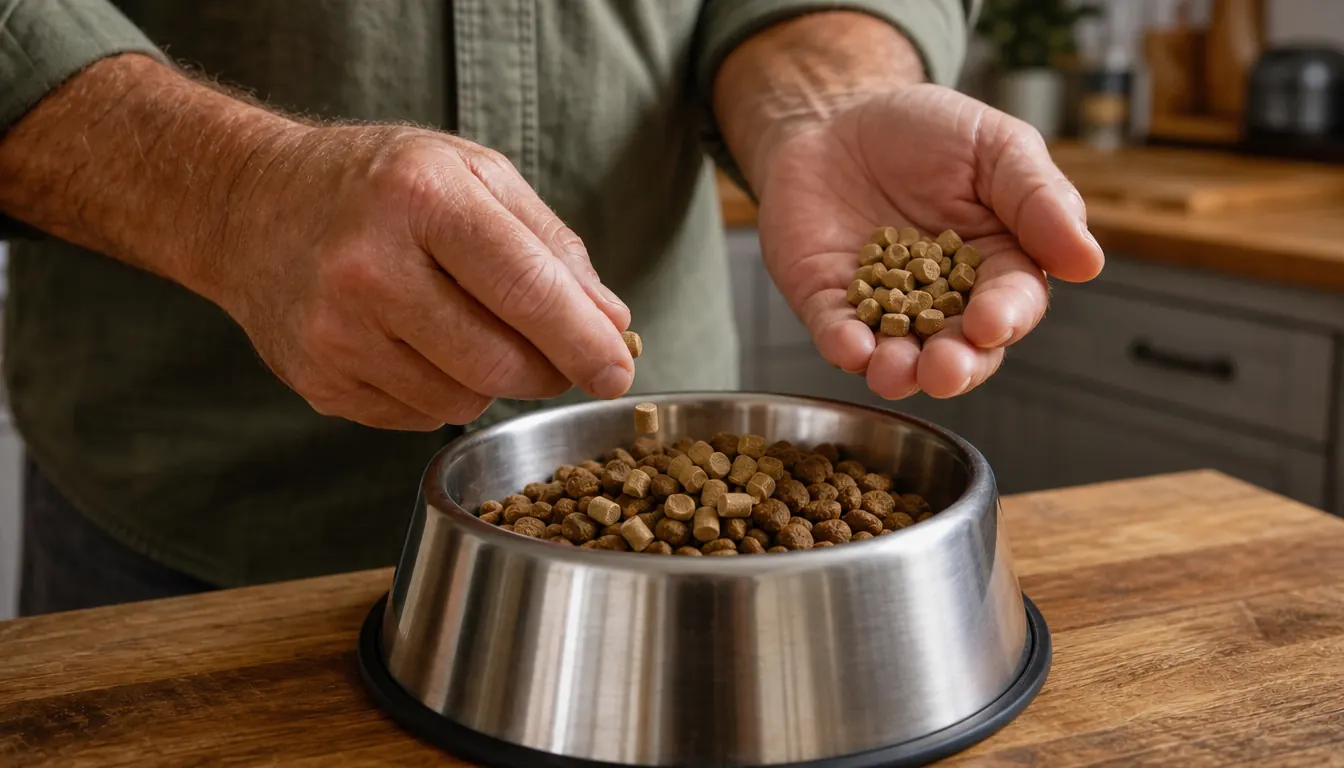
Biscuit is not a dog who swallows pills happily. The Cosequin chewable tablets from Nutramax Laboratories are soft enough to break apart, and I can crumble one over his breakfast kibble without a fight. When a supplement is easy to give, you actually give it every day, and daily consistency is what matters. The first week I tried hiding a whole tablet in a spoonful of peanut butter, and he ate the peanut butter and left the tablet on the floor. Crumble it over his kibble instead, and it disappears before he finishes the bowl.
It pairs well with the omega fatty acids vets already recommend
Many joint supplements pair glucosamine with omega-3 fatty acids, and for good reason. Omega-3s help support a normal inflammatory response, while glucosamine supports the cartilage itself. They address two different parts of the same problem, which is why so many veterinary joint products combine them. At the clinic, the vets I worked with often suggested an omega-3 supplement alongside a glucosamine product, especially for older dogs with stiff hips. The two work on different timelines, and that is exactly why they complement each other.
It is gentle enough for long-term daily use
Joint supplements are not a one-week fix. They work slowly, over months, and they only help if you keep giving them. The chewable tablets from Nutramax Laboratories are formulated to be given every day, and in my experience they are well tolerated. Biscuit has taken them daily for months with no stomach upset. I started him on a half tablet for the first five days, then moved to a full tablet with his evening meal, and he never missed a beat. That matters to me, because a supplement that upsets the stomach is one you will stop giving.

It is a reasonable first step before prescription medication
When a dog starts hesitating at the steps, many vets suggest trying a joint supplement before moving to prescription pain medication. That is not because supplements replace medication, but because some dogs improve enough with basic joint support that they never need the stronger stuff. It is a conversation worth having with your own veterinarian. I have seen it go both ways in the exam room: some dogs do fine on a supplement alone, and others need prescription help within a year. The supplement is a reasonable place to start, not a promise that you will never need anything else.
It supports mobility without masking the problem
Pain relievers can hide the signs of a worsening joint, which means a dog might keep jumping off the couch when he should not. Glucosamine does not mask pain. It supports the joint itself, so you are not tricking your dog into doing more than his body is ready for. That distinction mattered to me when I worked at the clinic. A dog on pain medication alone might feel better and then overdo it, while a dog on joint support is still moving within his limits. That is a quieter, slower kind of help, and for a senior dog I think that is the right kind.
It is made by a company with deep roots in veterinary medicine
Nutramax Laboratories is the company behind Cosequin, and Cosequin is one of the brands I saw recommended most often during my years at the clinic. That history matters. A supplement company that has worked with veterinarians for decades is more likely to get the formulation right than a brand that just jumped into the category. I remember the first time I saw a Cosequin bottle, it was on the shelf in the treatment room, and the vets reached for it more than any other joint product. That kind of habit does not happen by accident.
It is worth trying before you assume surgery is the only answer
Not every stiff senior dog needs surgery. Some need weight management, some need physical therapy, and some need basic joint support. Glucosamine is one of the least invasive things you can try, and it gives you information. If your dog improves, you have learned something useful without putting him through a procedure. I have known dogs who lost five pounds and started moving better than dogs who had expensive procedures. Weight and joint support come first for a reason, and surgery is a much bigger decision that deserves a much longer conversation with your vet.
It gives you a way to do something while you wait for the vet
If your dog is stiff, your first call should be to your veterinarian. But the vet visit can be days away, and in the meantime a joint supplement is a reasonable, low-risk step to start. It is not a substitute for a diagnosis, but it is a way to feel like you are helping while you get the answers you need. When Biscuit first started hesitating at the back steps, I called the clinic on a Friday and could not get him in until Tuesday. I started the supplement that weekend, and by the time we saw the vet I had a week of observations to share. That made the visit more useful for both of us.
What I'd Skip
I would skip any joint supplement that promises fast results, and I would skip anything that claims to cure arthritis. Glucosamine is not a cure, and any product that talks like one is not being honest with you. I would also skip giving your dog human glucosamine tablets, because the dosing is different and some human formulas contain ingredients that are not safe for dogs. And if your dog is limping, in obvious pain, or refusing to eat, skip the supplement aisle entirely and call your veterinarian first.
Biscuit still hesitates at the back steps some mornings, but he does not need a running start the way he did a few months ago.
Talk to your vet, then consider starting with Cosequin
A joint supplement is not a substitute for a veterinary exam, but it is a reasonable thing to discuss with your vet. The Cosequin chewables from Nutramax Laboratories are the ones I chose for my own dog.
Amazon Check Today's Price on Amazon →