
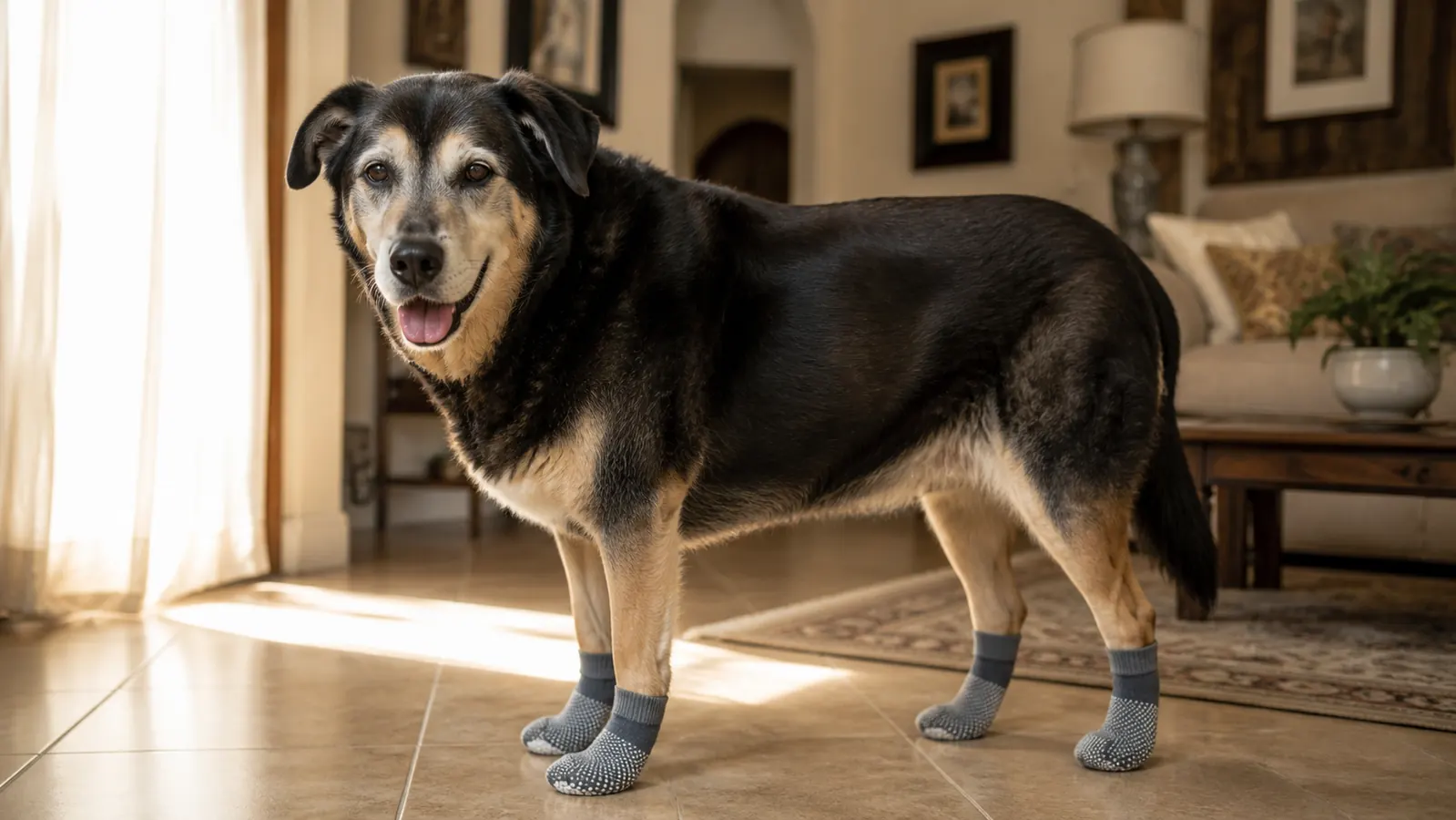
The first time Biscuit slid on our kitchen tile, he was just turning to follow me. His back feet went out from under him, his hip hit the floor, and he let out a yelp that I heard from the bedroom. I spent 24 years as a veterinary technician, so I know exactly what a dog with stiff hips goes through when the floor gives way. I also know that the fix is usually simpler than people think. That is why I ordered the DOK TigerToes Non-Slip Dog Socks, and why I have kept them on Biscuit's back paws almost every day for the past several months.
Biscuit is an 11-year-old yellow Lab mix, about 74 pounds, with the kind of back-end stiffness that shows up first thing in the morning and after long naps. He hesitates at the three back steps down to the yard, and he braces himself before jumping into the SUV. The floors in our single-story house are tile and laminate, which look nice and are absolutely treacherous for a big dog whose hips are not what they used to be. These socks from DOK are not a cure for arthritis. Nothing is. But they solved the specific problem of Biscuit's feet sliding out from under him, and they have held up far better than I expected.
The Quick Verdict
DOK TigerToes are the best non-slip socks I have tried for a senior dog on slick floors. They stay on, the grip is genuinely grippy, and after months of daily wear they still fit. They are not a medical fix for hip stiffness, but they stop the sliding that makes stiffness worse.
Amazon Check Today's Price →Stop the Sliding Before It Starts
If your dog has ever lost their footing on tile, laminate, or hardwood, you know the sick feeling of watching them scramble. DOK TigerToes give senior dogs the traction they need to move around the house with confidence.
Amazon Check Today's Price on Amazon →How I've Used It
I have been using the DOK TigerToes on Biscuit for about five months now, and I have been deliberate about it. He wears them on his back paws only, because that is where his weakness is. I put them on first thing in the morning before he gets up from his bed, and I take them off at night after his last trip outside. On days when we are just around the house, that means he wears them for ten or eleven hours at a stretch.
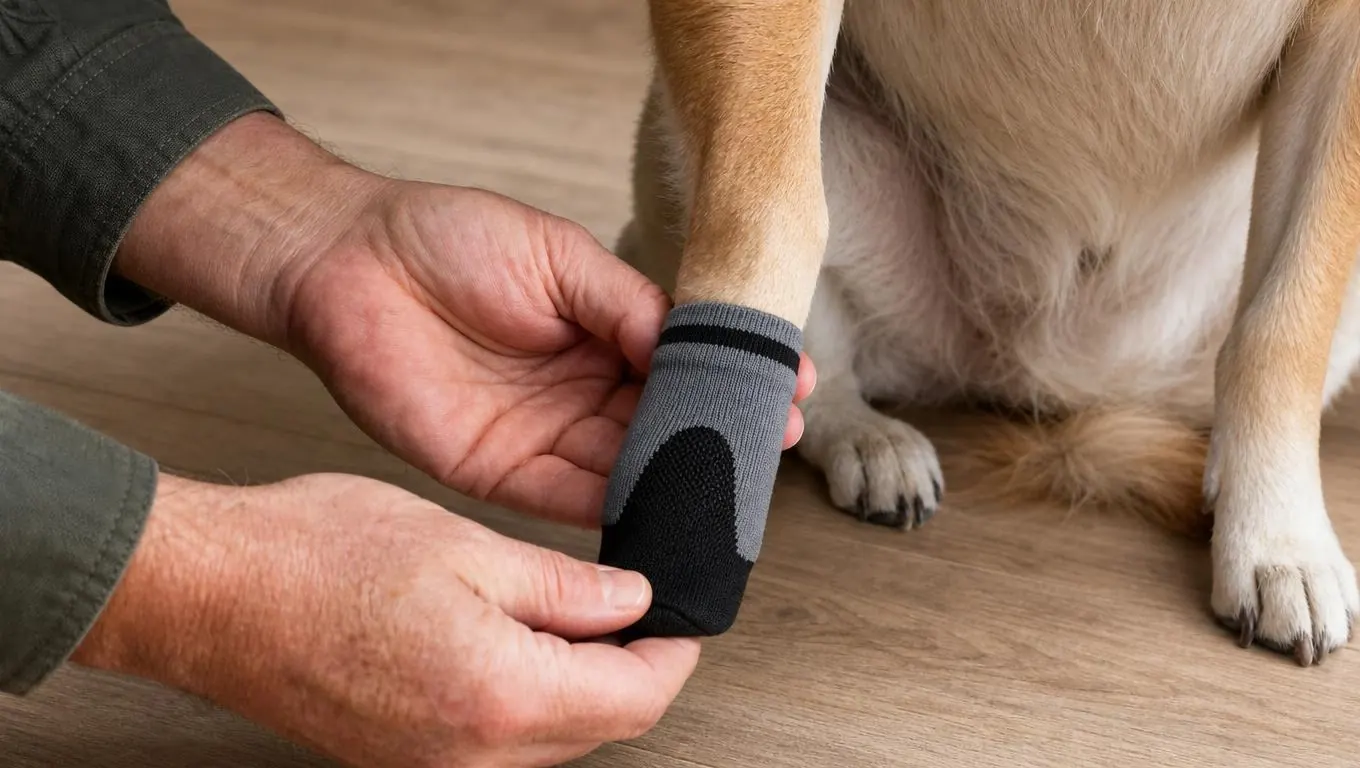
The routine is simple. I roll the sock down into a cuff, slip it over his paw, and unroll it up over his ankle. The sock has a wide band at the top that holds it in place without digging in. The grip pattern on the bottom is what does the real work. It is a thick, textured rubber that grabs the tile instead of skating across it. I have watched Biscuit stand up from a nap, walk across the kitchen, and turn around on the laminate without a single slip. Before the socks, that same turn was a slow, careful shuffle.
I wash them about twice a week in cold water and let them air dry. They come out of the wash looking the same as they did the day they arrived. No frayed seams, no stretched-out ankles, no peeling grip. That matters to me, because I have bought cheaper socks before that looked like rags after three washes.
Getting Biscuit used to the DOK TigerToes took about a week, and I would not skip that week. The first morning he lifted each foot high like he was walking through snow, which is normal for a dog wearing anything on his paws for the first time. I kept the first sessions short, ten minutes during breakfast, and took them off before he could start worrying at them. By day four he walked normally, and by the end of the week he stopped noticing them. Starting with long wear is how you get a dog who chews at socks, so build up the time slowly and make it pleasant with a treat or two.
What Makes the Grip Work
The thing that separates the DOK TigerToes from the thin cotton socks you can buy at a drugstore is the sole. The bottom of each sock is covered in a raised rubber pattern that is thick enough to actually bite into the floor. When Biscuit puts weight on his paw, the rubber compresses slightly and grips the tile. It is the same idea as the non-slip socks they give you in the hospital, but built for a dog's weight and stride.
The socks are also cut higher than most. They come up over the ankle joint, which means they stay put even when Biscuit is walking fast or turning. I have seen dogs kick off cheap socks in about ten seconds. Biscuit has never once kicked one off, and he is a dog who likes to shake his paws after a walk. The elastic band at the top is snug without being tight, and it does not leave marks on his skin.
One detail I appreciate as a former vet tech: the socks have a visible seam along the toe that makes it easy to line them up correctly. You can see at a glance whether the grip is facing the floor. That sounds like a small thing, but when you are putting socks on a wiggly dog at 6:30 in the morning, it saves a lot of fumbling.
Fit matters more than any other feature. Before ordering, I set each of Biscuit's paws on a sheet of paper while he stood with his weight on it, marked the widest points, and measured across. His back paws came out a little smaller than his front paws, which is common in Labs, and I chose the size that fit the front without being sloppy on the back. A sock that is too big twists, so the grip ends up on the side of the paw where it does no good. A sock that is too tight leaves marks above the ankle. If you are between sizes, measure again, because the extra minute saves you a return.
How They Held Up Over Months of Daily Wear
The honest answer is: better than I expected. I assumed I would be replacing these every six weeks, because that has been my experience with other dog socks. After five months, the DOK TigerToes are still on their first pair. The rubber grip on the bottom shows some wear on the edges where Biscuit drags his back feet slightly, but the grip in the center of the sole is still doing its job.
The stitching has held up through dozens of washes. The ankle bands have not stretched out. The fabric has not pilled or thinned. I have had to re-tighten the velcro-style closure on one sock, and I will be honest that the closure is the part I watch most closely. It is the one piece of the design that could fail first. So far, it has not.
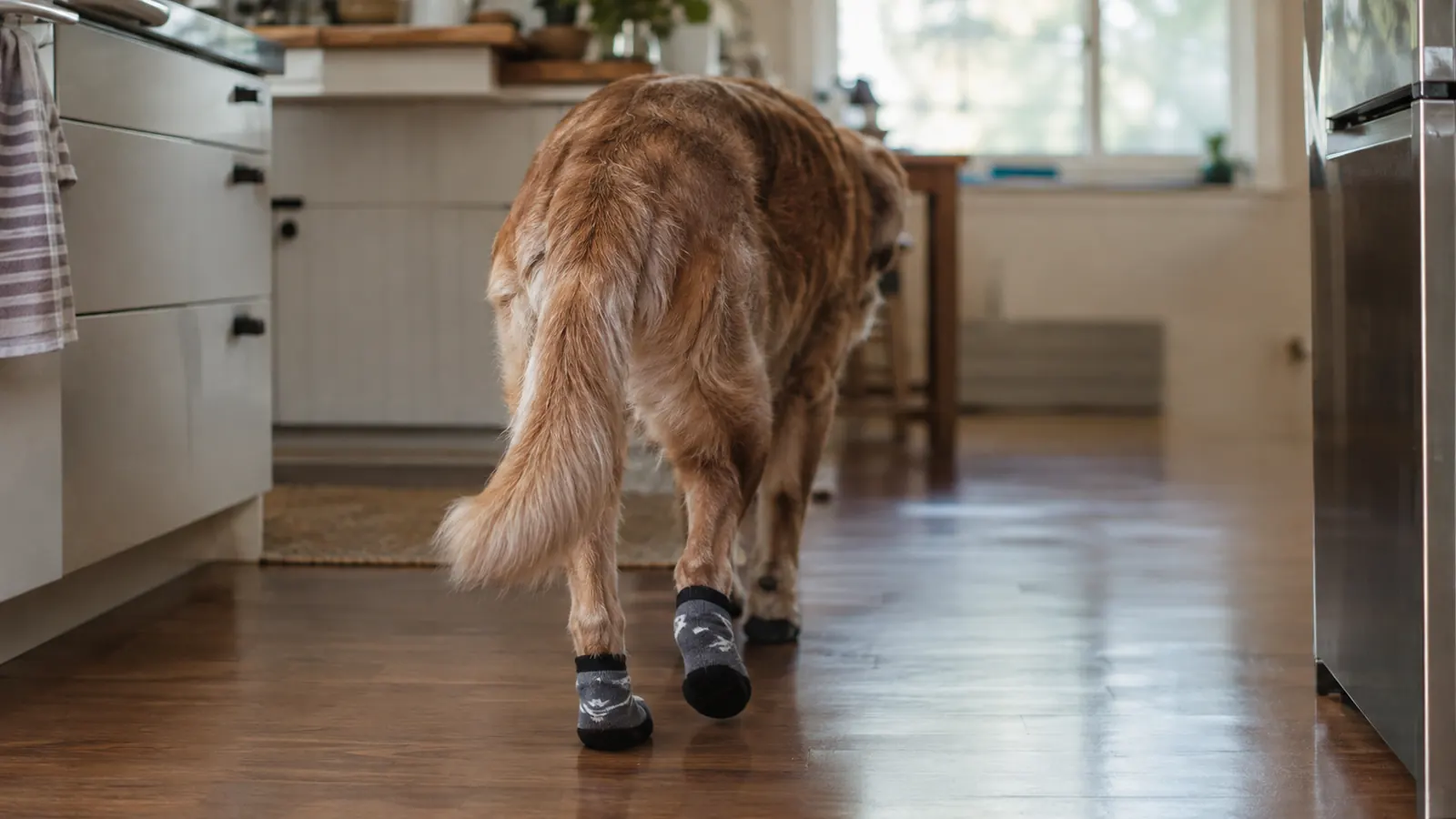
What surprised me most is how much confidence Biscuit has gained. In the first week, he walked like he was testing the floor with every step. By the third week, he was trotting across the kitchen to meet me at the door. He still has stiff hips in the morning, and he still needs a little help getting into the car. But he no longer braces himself before every step on the tile. That is a real change, and it happened because the socks removed the fear of falling.
The change I noticed most was in the mornings. Biscuit is at his stiffest after a long night, and that used to be when he slid the most, because he would try to stand up quickly and his back feet would skate out sideways on the tile. With the DOK TigerToes on, he gets up in one try most mornings. I put them on right after he wakes and before he walks into the kitchen, so his first steps of the day are on solid footing. He also started walking into the kitchen again instead of waiting in the hallway for me to bring his breakfast to him, which he had done for weeks before we started.
After five months of daily wear, the DOK TigerToes are still on their first pair. That is not something I can say about any other dog sock I have tried.
The Tradeoffs Nobody Mentions
There are a few things I want to be straight with you about. First, the socks are not a substitute for managing your dog's joint health. Biscuit still gets his joint supplement every morning, he still takes short, frequent walks instead of one long one, and he still has an orthopedic bed in every room he likes to nap in. The socks handle the floor. They do not handle the arthritis.
Second, you have to be willing to put them on and take them off. That is a two-minute job twice a day, and some dogs never get used to having things on their feet. Biscuit was fine after about three days. If your dog is sensitive about their paws, you will want to go slowly and use treats. I have seen plenty of dogs at the clinic who would absolutely refuse to wear these, and that is okay. They are not for every dog.
Third, the socks work best on smooth indoor floors. On wet grass, on concrete, or on carpet, they do not add much. I take them off before Biscuit goes outside, because the grip is designed for indoor surfaces and I do not want him tracking water through the house. If your main concern is outdoor footing, these are not the tool for that job.
There is a hygiene side too, which I watched for out of habit from the clinic. Paws need air, and a dog wearing socks all day can end up with damp skin between the toes, especially in warm weather. I take Biscuit's socks off for a few hours every afternoon and every night, check between his toes and around his nails, and only put them back on dry feet. Twice I found a little redness at the top of the band, and both times it went away after a day without the socks and a slightly looser fit. If you see swelling, sores, or redness that does not clear up quickly, call your vet.
What I Liked
- Grip pattern covers the whole pad area, not just the toes
- Biscuit gets up in one try most mornings on tile and laminate
- Held up through months of daily wear and regular washing
- Easy to put on once you learn the roll-down method
- No glue and nothing attached to the nails, so they come off every night
Where It Falls Short
- A week of short sessions before most dogs walk normally in them
- Fit takes care, and paws can be different sizes front and back
- Grip is meant for smooth indoor floors, not wet grass or pavement
- Need to come off daily so paws can breathe and be checked
Who This Is For
The DOK TigerToes are for anyone with a dog who slides on smooth floors. That includes senior dogs with hip or knee stiffness, dogs recovering from surgery who need extra traction, and young dogs who get the zoomies on hardwood and cannot stop in time. If your dog has ever done the splits on your kitchen floor, you know the feeling I am talking about. These socks give them back their footing.
They are also for people who are tired of chasing socks around the house. The fit is secure enough that Biscuit has never lost one mid-stride. I have seen him run across the living room, slide to a stop on the rug, and turn around without either sock budging. For a 74-pound dog, that is a serious test, and the socks passed it.
Who Should Skip It
If your dog will not tolerate having their paws handled, these are probably not worth the fight. Some dogs, especially ones with past paw injuries or strong opinions about grooming, will never accept socks. You know your dog. If putting on a sock is going to be a daily battle for both of you, there are other traction options like paw wax or adhesive toe grips that might go over better.
I would also say these are not the right choice if your dog's slipping is actually a sign of something more serious. If your dog is suddenly unable to stand, dragging a leg, or crying out when they walk, do not order socks. Call your veterinarian. I spent 24 years in a clinic, and I can tell you that sudden changes in mobility deserve a professional look, not an Amazon order. The socks are a comfort and safety tool, not a treatment.
Give Your Dog Their Footing Back
Months of daily use have convinced me that DOK TigerToes are worth every minute of the two-minute routine. If your dog is sliding on your floors, they deserve the same chance to move around the house without fear.
Amazon Check Today's Price on Amazon →