
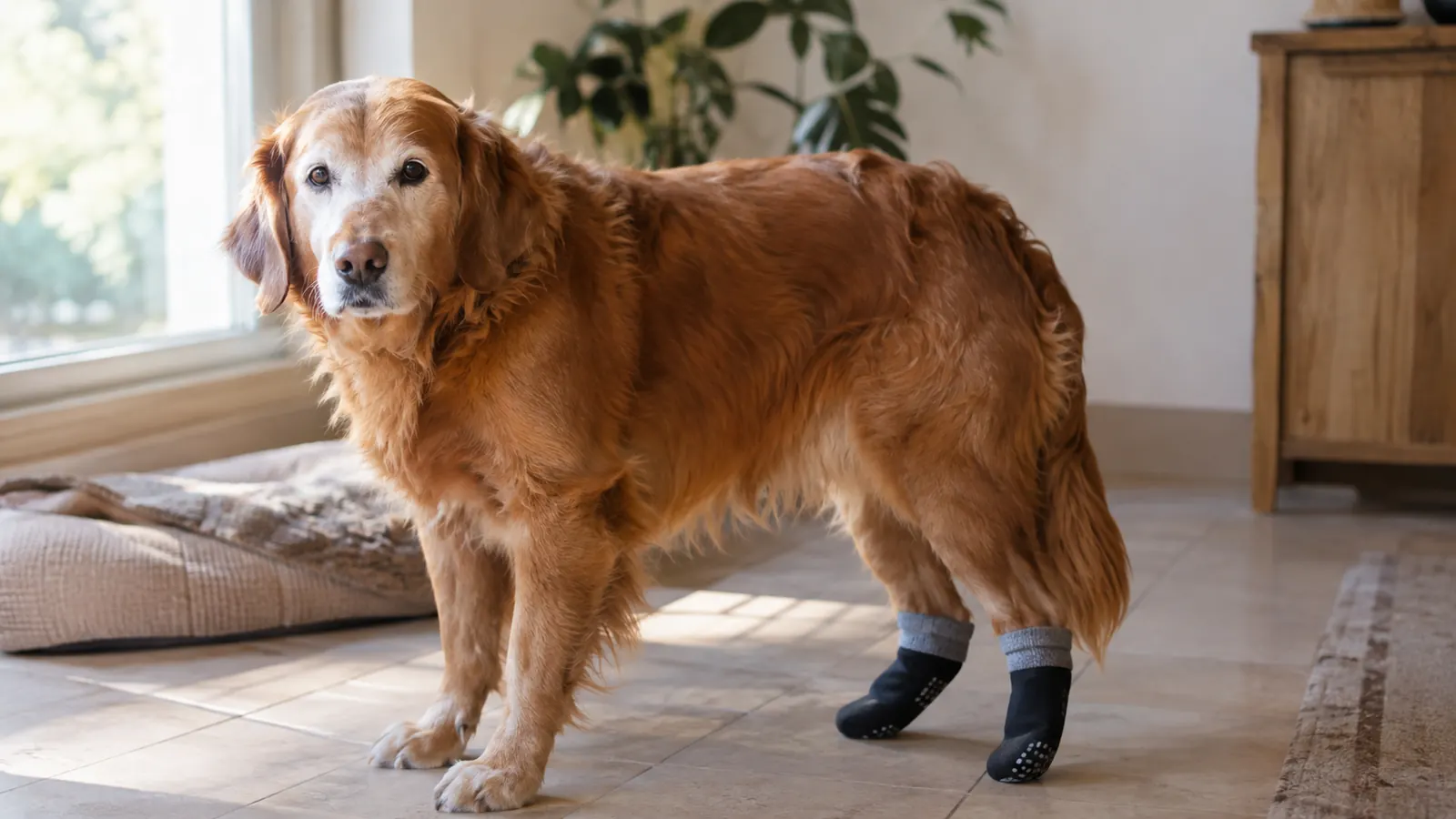
The first time I watched Biscuit's back feet slide out from under him on our kitchen tile, my heart actually stopped. He caught himself before he went down, but the look on his face said everything: he no longer trusted the floor he had walked on for years. At 11 years old and 74 pounds, a yellow Lab mix does not bounce back from a fall the way a puppy does. I spent 24 years as a veterinary technician, so I knew exactly what that slip meant for his hips, his confidence, and his willingness to move around the house. What I did not know was how to fix it without ripping up every floor in the house.
I tried the obvious things first. Runners in the hallway, a rug by the back door, more traction spray on his paw pads. Some of it helped a little, but the tile in the kitchen and the laminate in the living room were still slick, especially when Biscuit first stood up from a nap and his back hips were stiff. That is when I started looking seriously at non-slip dog socks, and specifically at the DOK TigerToes Premium Non-Slip Dog Socks. They are not a cure for arthritis, and I would never tell you they are. But they gave Biscuit something he needed right away: a floor he could trust again.
Give Your Senior Dog Steady Footing Today
DOK TigerToes non-slip socks add grip on tile, laminate, and hardwood in seconds. No floor changes, no rugs everywhere, just a sock that helps your dog stand and walk with more confidence.
Amazon Check Today's Price on Amazon →Step 1: Watch Your Dog on the Floor Before You Buy Anything
Before I ordered a single sock, I spent two days just watching Biscuit move through the house. I wanted to know which surfaces gave him trouble, which paws slipped first, and when the slipping was worst. For Biscuit, it was the kitchen tile right after he got up from a nap, and the laminate in the hallway when he turned around quickly. His back feet were the ones that slid, because his stiff hips made him carry more weight behind and his back paws could not grip the way they used to.
You do not need a notebook for this, but you do need to be honest about what you see. Does your dog slip on every floor, or just one room? Do they slip when they first stand up, or when they try to turn? Do they hesitate at doorways or refuse to walk down a hallway they used to trot down? That last one is the one that matters most. A dog that is hesitating is a dog that has already learned the floor is dangerous, and that fear can be harder to undo than the physical stiffness.
If your dog is limping, refusing to put weight on a leg, or crying out when they move, do not reach for socks. Reach for the phone and call your veterinarian. Slipping can be a symptom of a bigger problem, and no sock in the world replaces a proper exam. I am not a vet, and I do not play one in this article. I am just someone who spent a lot of years watching dogs move and learning what helps them move better.
Step 2: Measure Your Dog's Paws and Pick the Right Size
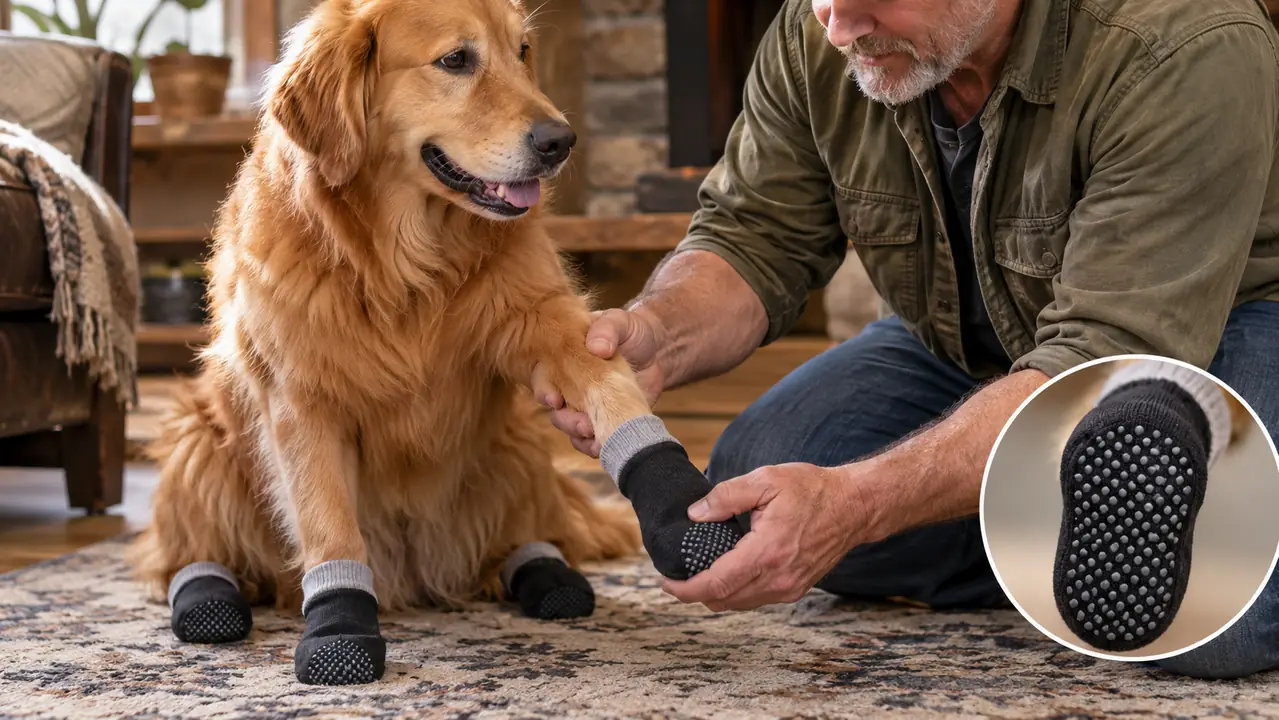
Non-slip socks only work if they stay on, and they only stay on if they fit. DOK TigerToes come in a range of sizes, and the brand's size chart is based on paw width and length, not on your dog's weight. That surprised me at first, because I am used to buying dog gear by weight. But a 74-pound Lab can have paws that are narrower than a 60-pound dog's paws, and a sock that is too loose will slide off in the first five minutes.
To measure Biscuit, I had him stand on a piece of paper and traced around his front paw and his back paw. His back paws were slightly smaller, which is common in older dogs who carry less weight up front. I ordered the size that matched his back paws, because those were the ones doing the slipping. The socks have a stretchy cuff that sits above the wrist, and the grip pattern on the bottom covers the whole pad area. When they fit right, they feel snug without being tight, and you can slide two fingers between the sock and the leg.
If you are between sizes, size up. A sock that is a little loose can be adjusted with the cuff, but a sock that is too tight can rub or cut off circulation. And if your dog has dewclaws, check that the sock does not bunch up around them. I learned that one the hard way on the first day, when Biscuit kept stopping to lick at his front paw. The sock was fine, but the seam was sitting right against his dewclaw. A quick adjustment fixed it, and he stopped fussing.
Step 3: Introduce the Socks Slowly, With Treats and Short Sessions
The biggest mistake I see people make with dog socks is expecting the dog to love them instantly. Most dogs do not. Their paws are how they feel the world, and suddenly having something on them feels strange. Biscuit walked like a cowboy for the first ten minutes, lifting each foot way too high and looking at me like I had lost my mind. That is normal. That is not a sign the socks are wrong. That is a sign your dog is processing a new sensation.
Start with one sock on one back paw for a few minutes while you sit on the floor with your dog. Give them a treat, let them sniff the sock, and let them walk a few steps. The next day, try two socks. The day after that, try all four if your dog needs them. Biscuit only needed his back paws covered, because those were the ones that slipped, but some dogs do better with all four. You will know pretty quickly which combination gives your dog the most stable walk.
Keep the first few sessions short and positive. Five minutes of walking on the tile with treats is better than twenty minutes of your dog trying to pull the socks off. And do not leave the socks on overnight or for hours at a time at first. Your dog's paws need to breathe, and you need to check for any rubbing or redness. Once Biscuit got used to them, he would wear them for a few hours at a time in the evening, which was when he did the most walking around the house.
Step 4: Use the Socks at the Times Your Dog Needs Them Most
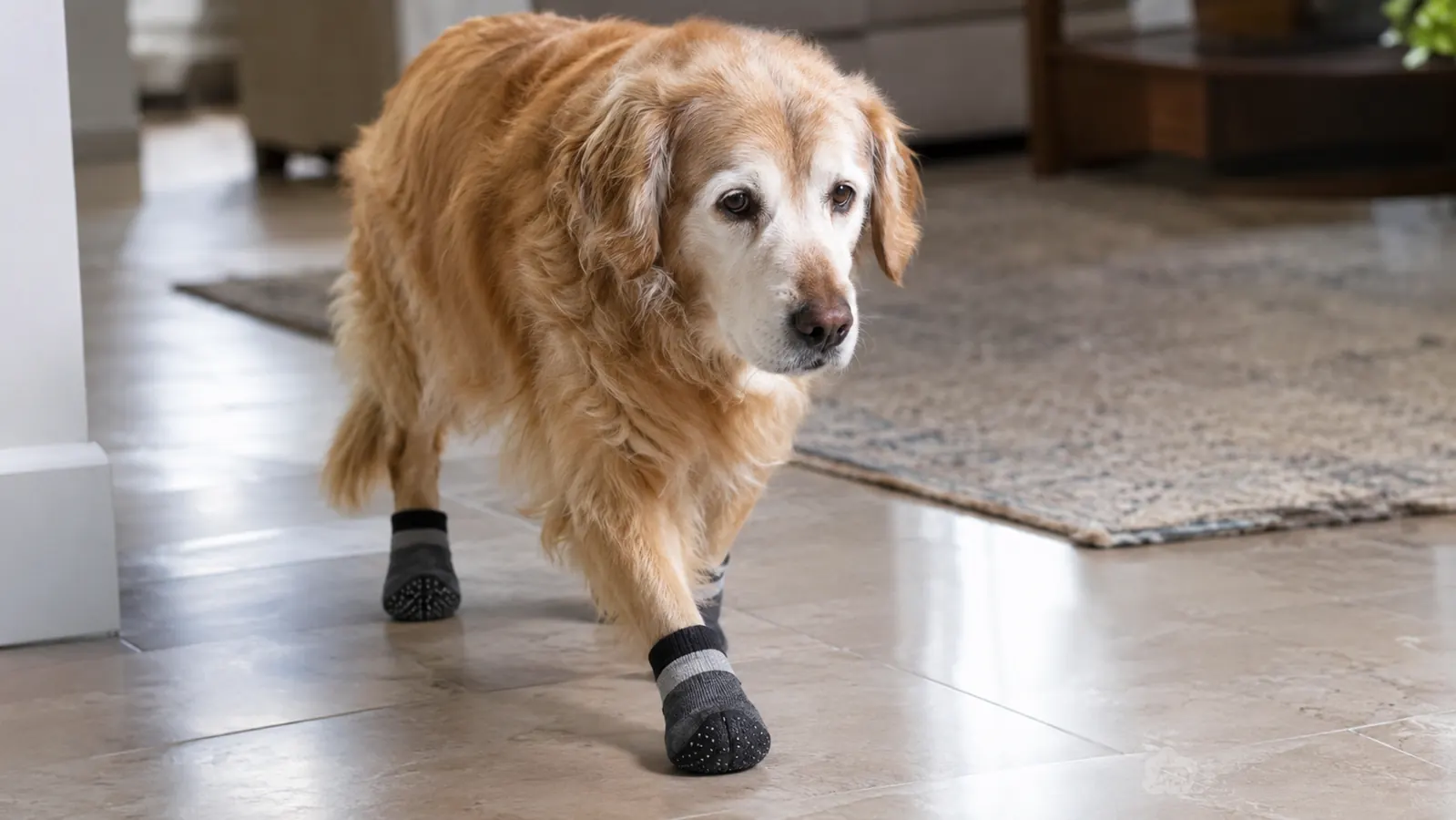
The trick with non-slip socks is not to use them all day, every day. It is to use them at the moments when your dog is most likely to slip. For Biscuit, that meant putting them on first thing in the morning, when his hips were stiffest and he had to walk across the tile to get to the back door. It also meant wearing them in the evening, when he was tired and his back legs were not lifting as cleanly. Those were the two windows when he was at the highest risk of falling.
Think about your own dog's day. When do they walk on the slickest floors? When are they at their stiffest or most tired? Is there a particular path they take from the couch to the water bowl, or from the bedroom to the back door? Those are the moments the socks earn their keep. You do not need to turn your dog into a sock-wearing fashion statement. You need to protect the ten seconds when they stand up from a nap and take those first unsteady steps.
I also found that the socks helped Biscuit on the three back steps down to the yard. The steps are wood, and in the morning they can be slick with dew. With the socks on, he went down them with more confidence, placing each foot deliberately instead of sliding. That confidence is the part that is hard to measure but easy to see. A dog that trusts his footing moves more, and a dog that moves more keeps more muscle, and muscle is what supports aging joints.
Step 5: Wash, Rotate, and Check the Socks Regularly
Non-slip socks are not a set-it-and-forget-it product. They get dirty, they get wet, and the grip pattern wears down over time. I bought two pairs of DOK TigerToes so I could rotate them, which meant I always had a clean, dry pair ready when Biscuit needed them. The socks are machine washable, and I washed them in cold water and let them air dry. I did not put them in the dryer, because I did not want the elastic to break down faster than it needed to.
Every few days, I checked the bottoms for wear. The grip pattern is a textured rubbery material, and you can see when it starts to smooth out. When the grip goes, the sock stops doing its job, and a sock without grip is just a foot warmer. I also checked the seams and the cuffs for any rough spots that could rub against Biscuit's skin. A sock with a hole in it can catch a toenail, and a toenail that catches can turn a helpful product into a hazard.
One more thing: keep the socks clean between uses. A sock that has picked up grit from the yard can track that grit onto the tile, which makes the floor more slippery, not less. I kept a small basket by the back door with the clean socks and a plastic bag for the dirty ones. It sounds fussy, but it took thirty seconds a day, and it meant the socks were always ready when Biscuit needed them.
What Else Helps
The socks did the heavy lifting, but they were not the only thing that helped Biscuit. I put a rug in the kitchen in front of the back door, which gave him a non-slip landing zone for his morning trip outside. I also trimmed the hair between his paw pads, because long hair between the pads can reduce the contact his paw pads have with the floor. And I kept his nails shorter than I used to, because long nails change the way a dog's foot lands and make slipping more likely. If you are not comfortable trimming nails, your vet tech or groomer can do it in a few minutes.
I also made sure Biscuit had a clear path through the house. That sounds simple, but it mattered. When a dog has to weave around furniture to get from the bedroom to the back door, they are making more turns, and turns are when the back feet slide out. I moved a small table out of the hallway and gave him a straight line to the door. The combination of the socks, the rug, the trimmed paw pads, and a clearer path made a bigger difference than any one of those things alone.
The socks did not cure Biscuit's stiff hips, but they gave him back something just as important: a floor he could trust.
Help Your Dog Walk With Confidence Again
DOK TigerToes non-slip socks are the simplest fix I found for a senior dog slipping on tile. They fit snugly, stay on during normal walking, and give your dog grip where they need it most.
Amazon Check Today's Price on Amazon →