
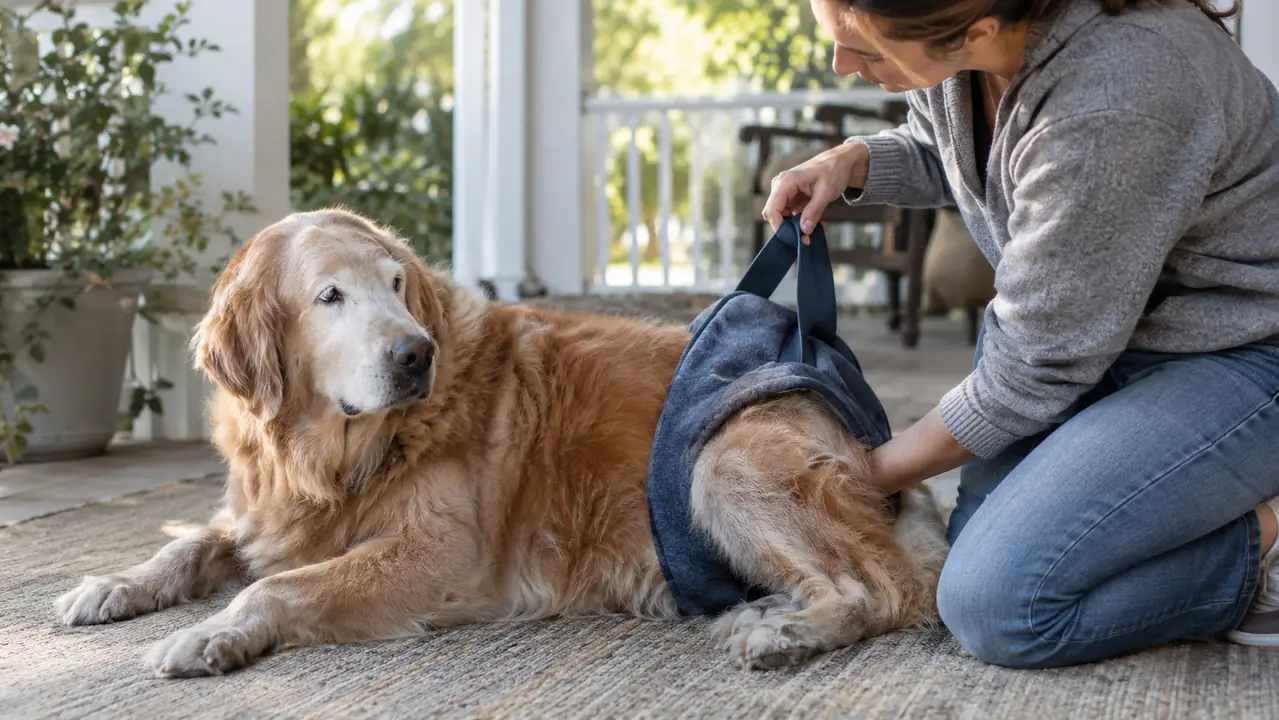
When my 11-year-old Lab mix Biscuit started hesitating at the three back steps down to the yard, I did what I did for 24 years as a vet tech: I watched him for a week before I bought anything. His front end was fine. His back hips were stiff, especially first thing in the morning, and he would stand at the top of the steps with his weight shifted forward, trying to decide if the drop was worth it. I knew he needed help under his rear end, not a full-body lift. So I ordered the LOOBANI Adjustable Dog Sling for Large Dogs Hind Leg Support ACL Recovery, and I also borrowed a full-body lift harness from a friend at the clinic to compare them side by side.
Here is the short answer: for a dog like Biscuit, whose front legs are strong and whose problem is a stiff, unsteady rear end, the LOOBANI rear support sling is the better everyday tool. It is lighter, faster to put on, and it puts the support exactly where he needs it. The full-body harness is a better choice for a dog who needs help with both ends, or for a dog who cannot bear weight at all. I will walk you through the differences, and where each one genuinely wins.
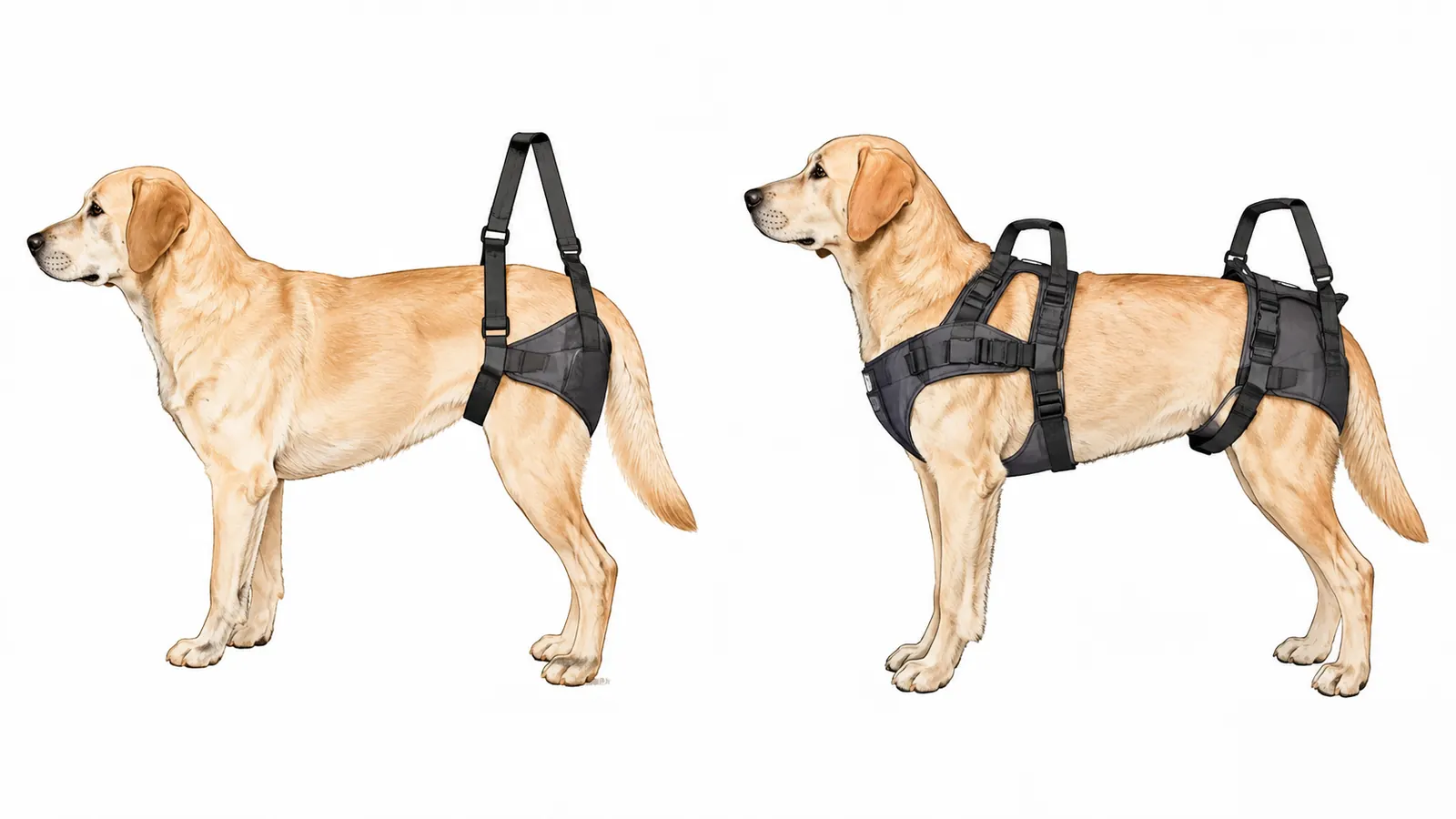
Before I get into the details, it helps to know what each one actually is. A rear support sling like the LOOBANI is a wide fabric band that slides under the belly in front of the back legs, with two long handles that come up to your hands. You put it on when you need it and take it off when you are done. A full-body lift harness is a vest that buckles around the chest and the hips, with a handle along the back and sometimes one near the tail. Many dogs wear that kind all day. They solve related problems, but they are built around different dogs, and choosing the wrong one makes daily life harder for both of you.
| LOOBANI Rear Support Sling | Full-Body Lift Harness | |
|---|---|---|
| Price | A single sling, the lower cost of the two | A full harness with more fabric and hardware, usually more |
| What it supports | Rear end only, which is where most senior dogs lose strength first | Chest and rear, for dogs who need help with both ends |
| Ease of putting on | Slip the padded panel under the belly and clip the straps, about 20 seconds | Step-in or over-head, then adjust four or five buckles |
| Fit for a stiff senior dog | Targets the hindquarters without squeezing the chest or shoulders | Can restrict front-leg movement if the chest strap sits too low |
| Best for | Dogs with strong front legs who need rear-end help on steps, curbs, and car rides | Dogs who need full-body support after surgery or with weakness in both ends |
Where the LOOBANI Rear Support Sling Wins
The LOOBANI sling wins on the two things that matter most for a stiff senior dog: speed and placement. Biscuit is 74 pounds, and he does not like standing still while I fiddle with buckles. With the LOOBANI, I slide the padded panel under his belly, bring the two straps up over his back, and clip them. The handles sit right at his hindquarters, so when he hesitates at the top of the back steps, I can lift his rear end with one hand and steady myself with the other. He does most of the work. I just take the weight off his hips for the three seconds it takes him to step down.
The other big win is that the LOOBANI does not touch his chest or shoulders at all. Biscuit still has plenty of strength in his front end, and a full-body harness can interfere with that. I have seen dogs at the clinic take shorter, choppier steps when a chest strap sits across the wrong spot. The LOOBANI leaves his front legs completely free, so he walks the way he already knows how to walk. It also fits under a winter coat or a harness for a leash, which matters in Fresno in January.
I also found the LOOBANI easier to use on the days when Biscuit was stiffest. On a cold morning in late November, he woke up so sore that he would not put weight on his right hind leg for the first few minutes. With the full-body harness, I would have had to lift his chest and rear together, which meant bending low and asking him to stand still while I adjusted four buckles. With the LOOBANI, I just slid the panel under his belly, clipped the straps, and took most of the weight off that right hip while he shuffled to the yard. He was moving more normally within a minute, and I did not have to wrestle him into anything.
Speed of use is the other place the LOOBANI pulls ahead for us. When Biscuit needs to go out at night, I do not want to spend two minutes fitting straps and checking buckles while he waits by the door. The sling slides under his belly in about five seconds, and I can do it in the dark. The full-body harness I tried took real fiddling every time, because the hip straps had to sit just right or they rubbed the inside of his thighs. Leaving it on all day solves that, but then you have a dog wearing a harness through every nap, and on a warm Fresno afternoon that is a lot of extra layers on a big dog.
Cleaning tips the scale too. The LOOBANI is a single piece of fabric with handles, so it goes in the wash with his blankets and dries overnight. A full-body harness has buckles, padding, and several straps that trap hair and dirt, and it takes longer to dry, which matters if your dog wears it daily and you do not own a spare. None of this is a reason to avoid a full-body harness if your dog truly needs one. It is a reason not to buy more harness than your dog needs, because every extra strap is something you have to fit, check, and wash.
Give your stiff senior dog rear-end support in seconds
The LOOBANI rear support sling is the tool I keep by the back door for Biscuit's morning steps. It is adjustable, padded, and takes about 20 seconds to put on.
Amazon Check Today's Price on Amazon →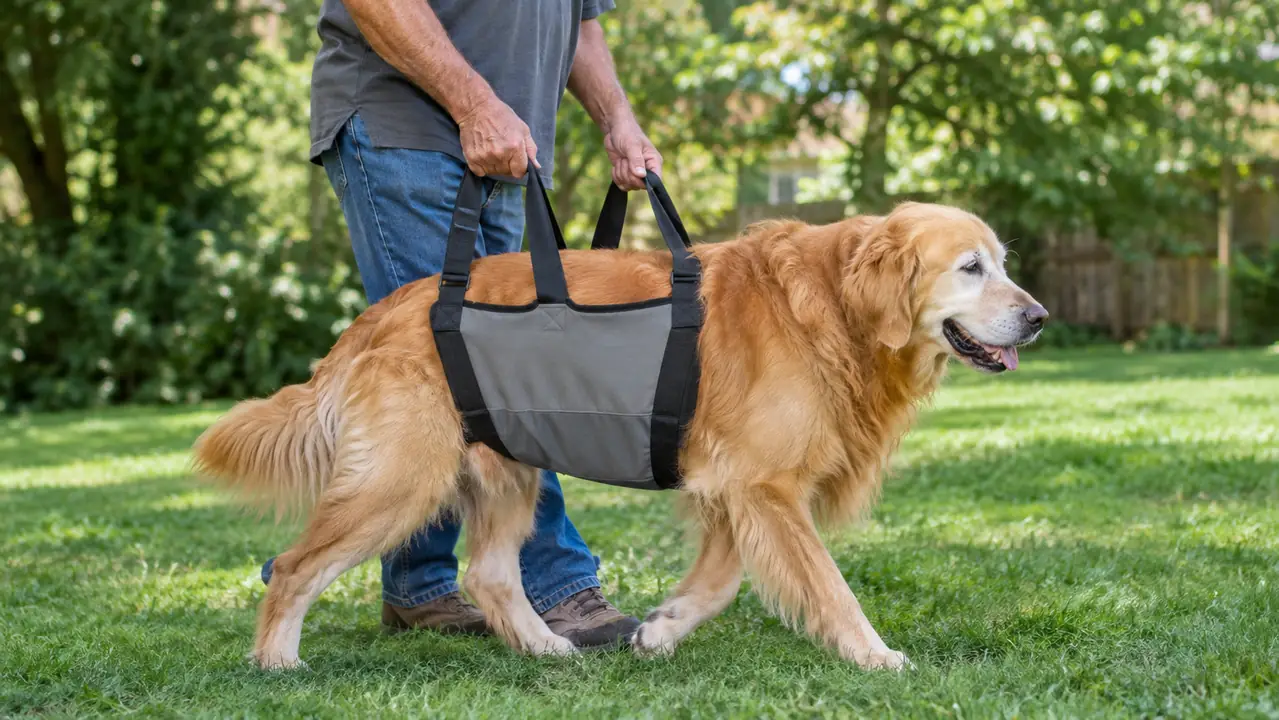
Where the Full-Body Lift Harness Wins
I am not going to pretend the full-body harness has no place. It does. For a dog who has just had ACL surgery, or a dog whose front legs are also weak, a full-body harness is the safer choice. It spreads the load across the chest and the rear, so you are not putting all the force on one small panel. A friend at the clinic used one for her German Shepherd after a femoral head ostectomy, and it let her lift the dog's whole hind end without bending over. That is a real advantage when a dog cannot bear weight at all.
Fit is the other strength of a good full-body harness, when the dog wears it all day. Because it buckles at the chest and the hips, the handle sits in the same place every time, and there is nothing to slide under the belly while your dog is already struggling. For an owner with arthritis in her own hands, not having to thread a sling under a big dog several times a day can be a real advantage. That is worth weighing honestly, even though it was not the deciding factor for us.
The full-body harness also wins for dogs who need to be carried up or down stairs, or lifted into a car from a dead stop. With the LOOBANI, you are supporting the rear end, but the dog still has to step up with his front legs. If the front legs cannot do that, the sling is not enough. The full-body harness gives you handles at both ends, so you can lift the whole dog evenly. For a 74-pound dog, that even distribution is the difference between a controlled lift and a wobbly one.
I saw that difference play out with a dog at the clinic years ago, a big mixed breed who had lost strength in both back legs after a spinal episode. The owners tried a rear sling first, and it did help them steady his hind end, but they still had to support his chest with a second person on the stairs. When they switched to a full-body harness, one person could manage the whole dog. That is the honest case for the full-body harness: it is more gear, but it gives you more control when the dog needs help at both ends.
There is a middle path some owners take, and I think it is reasonable. If your dog is like Biscuit today but you can see the front end starting to weaken too, start with a rear sling and keep an eye on how he handles the steps going down, since that is where front legs carry the most load. When the front starts to tremble or fold, that is the time to talk to your vet and look at a full-body harness. Buying the full harness first for a dog who only needs rear support means paying for features you will not use for months, and asking your dog to wear more than he needs.
Who Should Buy Which
Buy the LOOBANI rear support sling if your dog is like Biscuit: strong in the front, stiff in the rear, and only needs help for a few seconds at a time. It is the tool for back steps, curbs, getting into the car, and the first few wobbly steps after a long nap. It is also the easier one to keep on hand, because it folds flat and fits in a glove box or a tote bag.
Buy a full-body lift harness if your dog needs help with both ends, or if you need to lift the whole dog off the ground. It is more harness, and it takes longer to put on, but it gives you more control for a dog who truly cannot walk on his own. If you are not sure which one your dog needs, ask your veterinarian. They can watch your dog walk and tell you whether the weakness is in the rear, the front, or both.
One more thing I tell people who are deciding between the two: think about where you will use it most. The LOOBANI lives by my back door, and I grab it for the three steps down to the yard, the curb at the end of the driveway, and the high cargo floor of my SUV. The full-body harness is the one I would reach for if Biscuit ever needed surgery and could not bear weight at all. Most days, the sling is enough. On the days it is not, I am glad the harness is in the closet, but I would not want to wrestle him into it every single morning.
Whichever you choose, measure before you order. For a rear sling, measure around your dog's belly just in front of the back legs, and check the handle length against your own height, because a handle that is too short has you bending again and defeats the purpose. For a full-body harness, you need the chest girth, the waist, and often the length of the back. Take the measurements with your dog standing, not lying down. And give your dog a few calm days to get used to whatever you buy, with treats and no pressure, before you ask him to trust it on the stairs or getting into the car.
Start with the LOOBANI rear support sling for rear-end stiffness
If your senior dog has strong front legs but stiff back hips, the LOOBANI sling is the lighter, faster, more targeted option. It is the one I reach for every morning.
Amazon Check Today's Price on Amazon →